Battery Powered Outlets.
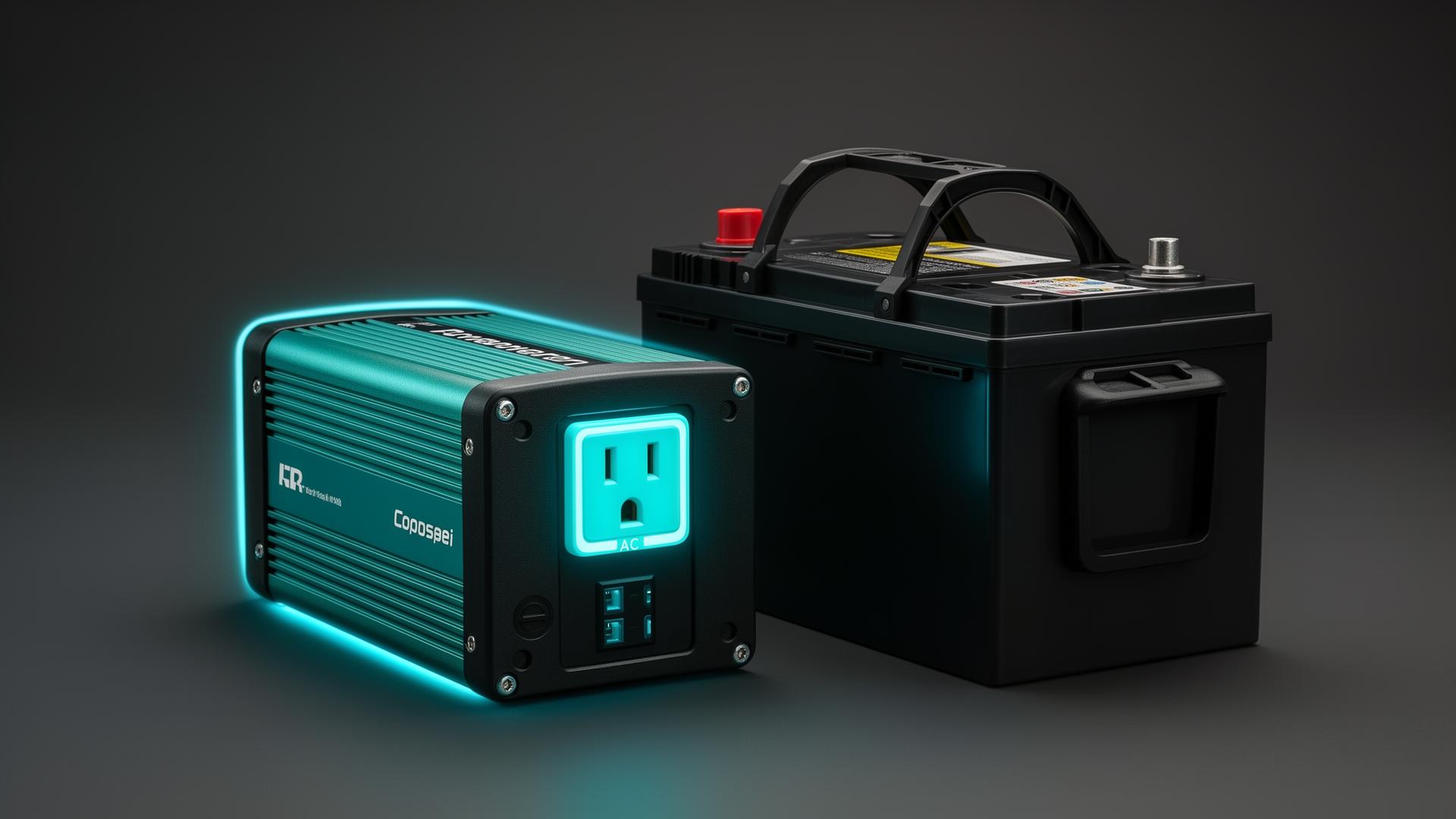
Inverters that turn a battery into a wall outlet — so any cord-powered tool, instrument, or appliance can travel with you.
Why use a power inverter
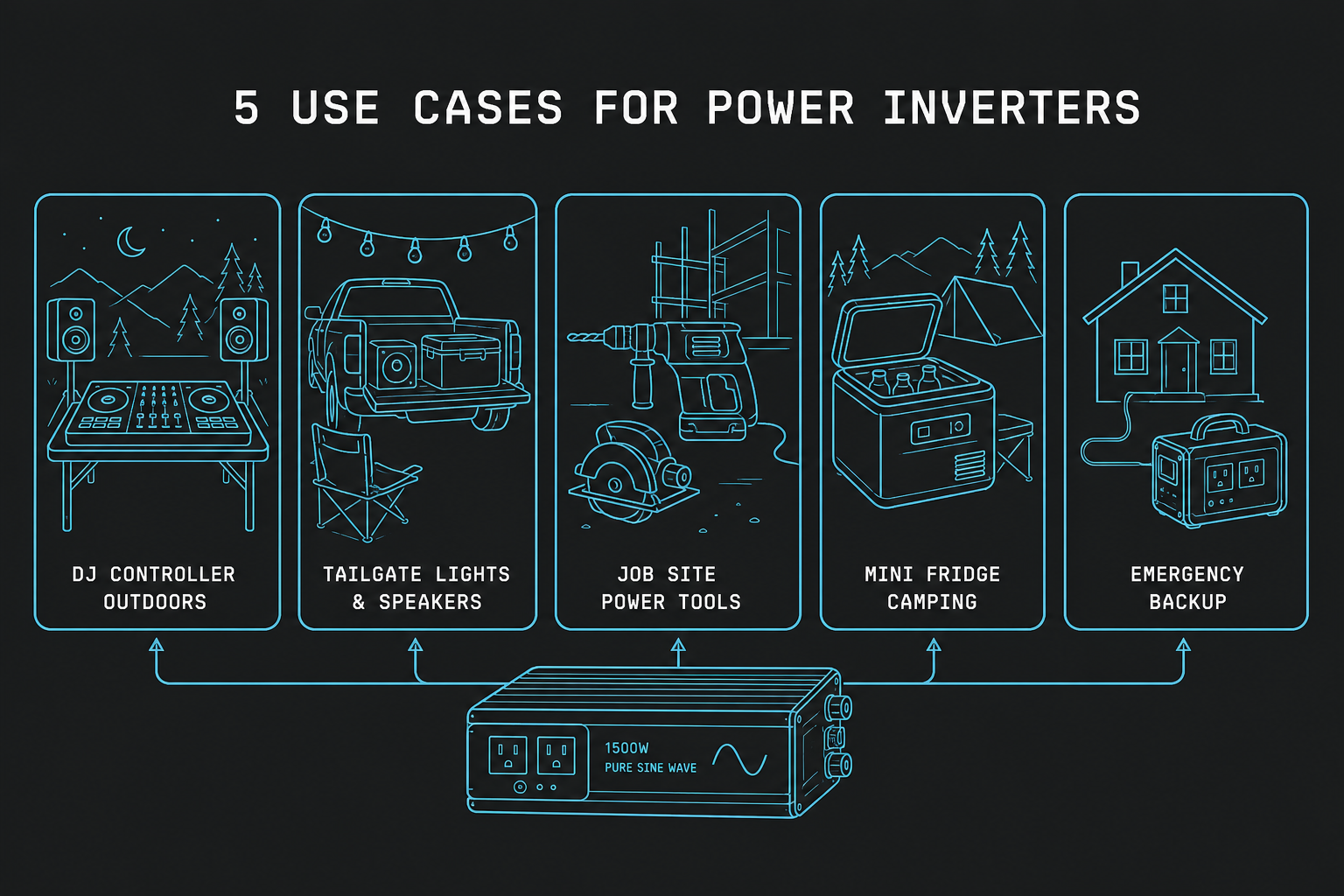
- DJ controller in the parkRun your rig from a deep cycle battery — no generator noise.
- Tailgate lights & speakersString lights, blender, sound system on a single 12V.
- Job site power toolsSaws, drills, chargers — anywhere a truck can park.
- Mini fridge while campingKeep food cold without shore power.
- Emergency backupOutage-proof your router, lamp, or CPAP.
- Remote film/photo shootsCharge laptops, monitors, and lights in the field.
How a battery becomes an outlet
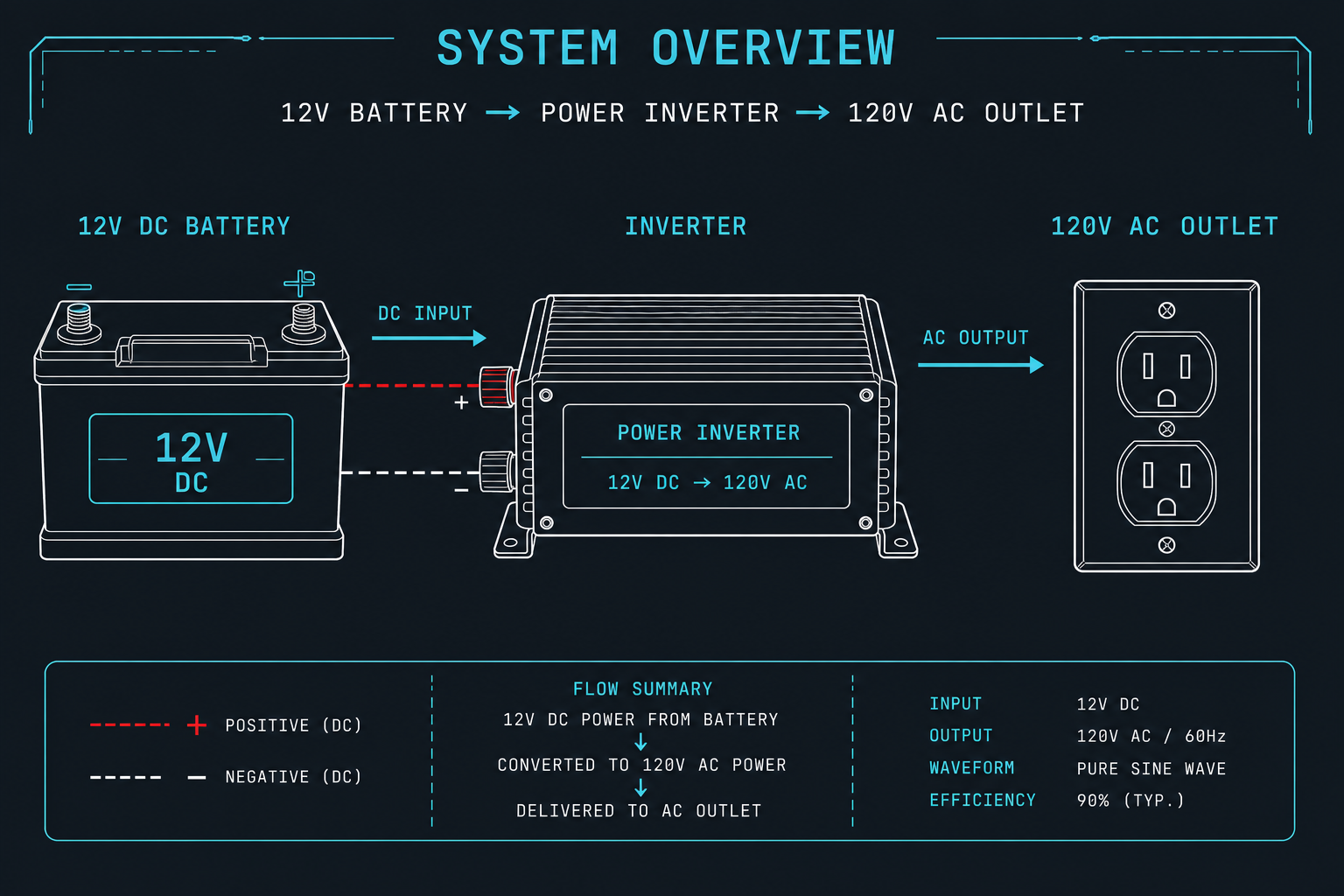
A battery stores DC — a steady one-way current. Wall outlets deliver AC — voltage that swings 60 times per second. An inverter is the translator between them.
Inside, an oscillator times the switch, MOSFETs chop DC into pulses, a transformer steps the voltage up to 120V, and a filter smooths the wave into clean pure-sine AC.
Learn more about how battery powered outlets work→Four ways to get a battery-powered outlet
Small batteries + mini inverters for phones, lamps, routers, and short jobs.
Deep-cycle batteries + 1000–3000W inverters for tools, fridges, off-grid living.
Sealed power stations — battery, inverter, and outlet in one rugged box.
Trucks and SUVs with AC outlets built in — your vehicle is the inverter.
Roll your own portable AC outlet
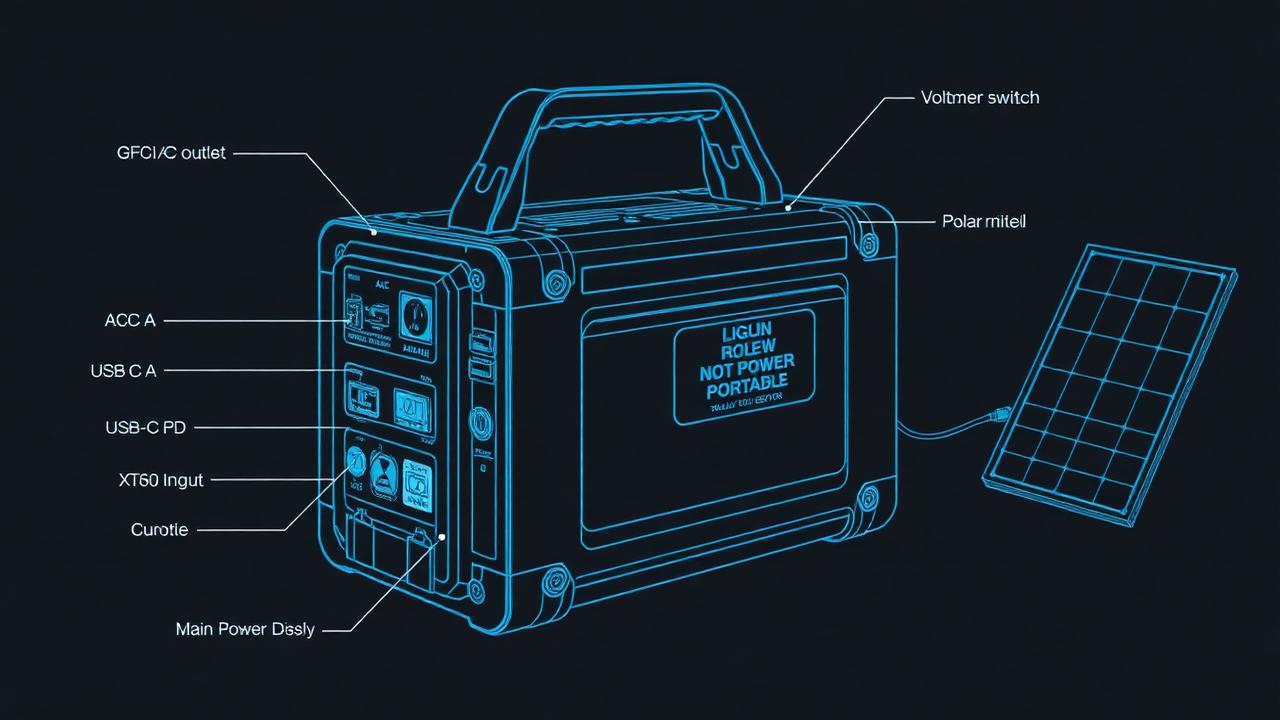
Once you understand the theory, you can build the device. A complete weekend project: a 300 W pure-sine 12 V LiFePO4 portable power station with a 120 V GFCI outlet, USB-C PD, and MPPT solar input.
The full guide covers the bill of materials, top-balancing the cells, wiring the EGS002 SPWM inverter, building the enclosure, and bench-testing with a scope — with a diagram for every step.
Go to Build Your Own→